Ontario home seller’s guide: price it right, prepare it well, sell with a plan
How to sell a home in Ontario in 2026: pricing from real sales, the prep that pays off, marketing, showings, handling offers under the new rules, and what comes off your sale price at closing.
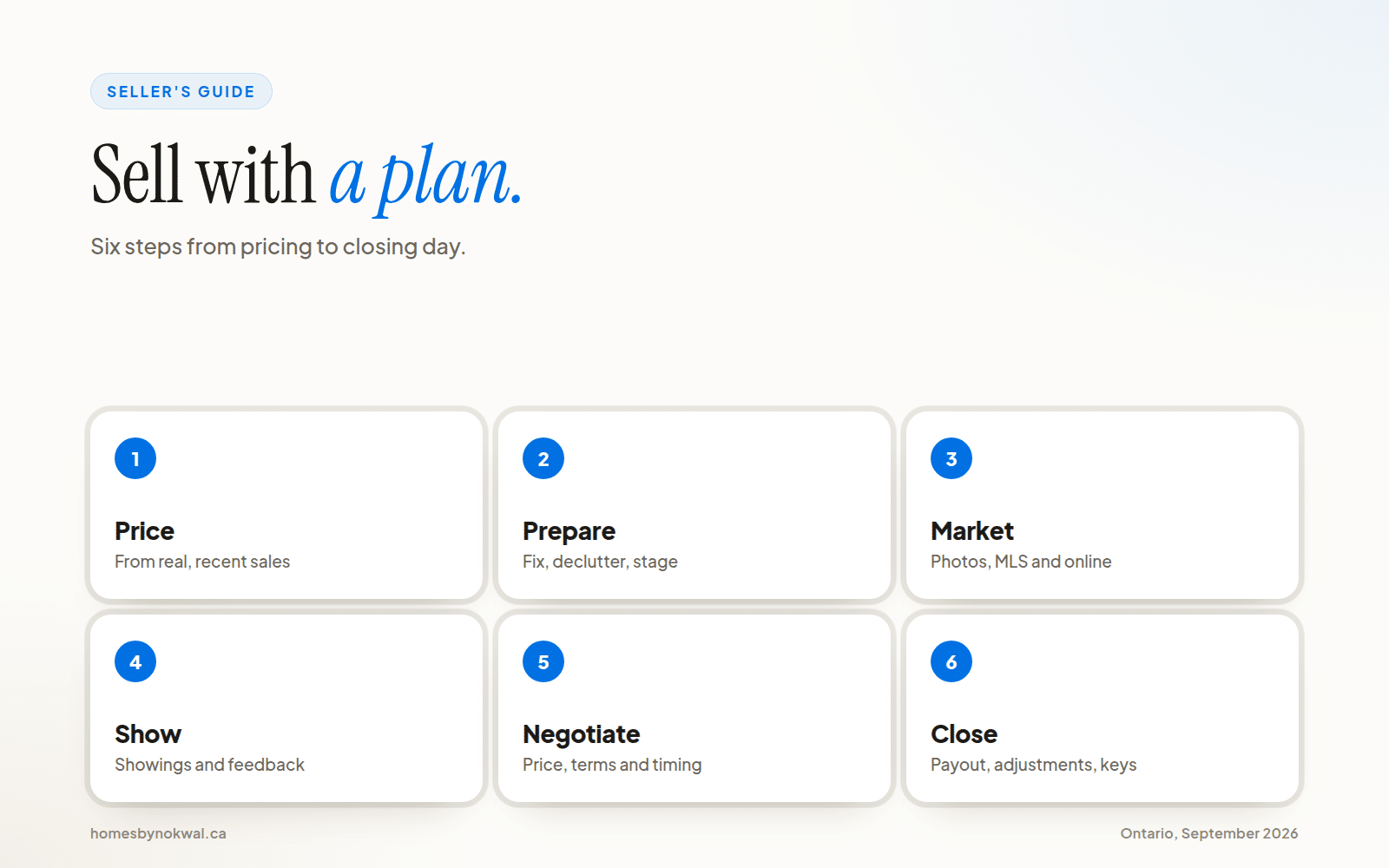
Selling a home is more than putting a sign on the lawn. Buyers today compare every listing online, take their time and negotiate. The sellers who do best price from real sales, prepare the home properly and handle offers with a plan.
Here’s how the process works in Ontario, step by step, and what to expect at closing.
Step 1: Price it from real sales
Your asking price is the most important decision you’ll make. It should come from a comparative market analysis: what similar homes near you actually sold for recently, how long they took, and what’s competing with you right now.
- Priced right, a home draws the most showings in its first two weeks, when interest is highest.
- Priced too high, it sits, buyers start asking what’s wrong with it, and it often sells for less than it would have.
- Your plan matters too. A holding-offers strategy (reviewing all offers on a set date) can work when demand is strong; in a slower market, pricing close to value and accepting offers any time is usually better.
Want to know where your home stands? Request a free home valuation.
Step 2: Prepare the home
Spend where buyers notice, and fix what an inspection would find.
- First impressions: a clean entry, trimmed landscaping, fresh paint in neutral colours and good lighting.
- Declutter and stage: less furniture makes rooms look bigger. Staging the main rooms often pays for itself.
- Fix the red flags: leaks, worn shingles, old electrical panels and a furnace near the end of its life scare buyers more than dated finishes do.
- Consider a pre-listing inspection. Knowing the issues up front lets you fix them or price them in, and it gives buyers confidence to make firmer offers.
- Gather your paperwork: survey, permits for renovations, utility costs, and details of any rental water heater or furnace.
Step 3: Market it where buyers look
Most buyers first see your home on a phone, so the photos do the heavy lifting.
- Professional photography and a floor plan, plus video or drone shots for larger lots and rural properties.
- MLS® and REALTOR.ca exposure, and your home on local search pages and social media.
- A clear, accurate description that answers buyers’ questions before they ask.
Step 4: Showings and feedback
Showings are booked through a secure system with notice to you, and a lockbox lets agents show the home while you’re out. After each showing we follow up with the buyer’s agent. If the same feedback comes up again and again, we adjust.
Step 5: Handle offers with a plan
An offer is more than a price. We compare:
- Price and deposit: a bigger deposit shows a more committed buyer.
- Conditions: financing and inspection conditions, and how long the buyer wants to satisfy them.
- Closing date: ideally lined up with your next move so you don’t need bridge financing.
Ontario’s Trust in Real Estate Services Act (in force since December 2023) changed how competing offers work. Every buyer who makes an offer must be told how many competing offers there are, and you can choose to share the terms of the offers with all bidders, without identifying who made them. We’ll decide together which approach suits your sale.
Step 6: Closing and your costs
Once the buyer’s conditions are removed, the sale is firm. Your lawyer prepares the documents, pays off your mortgage from the proceeds and sends you the rest on closing day.
Sellers in Ontario don’t pay land transfer tax, but these usually come off your sale price:
| Cost | What to know |
|---|---|
| Real estate commission | Agreed in your listing agreement and negotiable. Usually shared between the listing and buyer brokerages. |
| HST on the commission | 13% of the commission amount. |
| Legal fees | For the sale and your mortgage discharge. Ask for an all-in quote. |
| Mortgage payout | Your balance plus any prepayment penalty if you break a fixed or variable term early, and a discharge fee. |
| Adjustments | You get money back for property taxes or utilities you’ve prepaid past closing, or pay your share if they’re owing. |
| Moving and overlap | Moving costs, and bridge financing if your purchase closes first. |
Taxes: selling your principal residence is usually free of capital gains tax, but you still report the sale on your tax return. Rental or investment properties are different, and sellers who aren’t residents of Canada face extra withholding rules. Talk to your accountant before you list.
Your mortgage: ask your lender for a payout statement early. Breaking a fixed-rate mortgage can cost thousands, but many mortgages can be ported to your next home instead. See fixed or variable, and the mortgage stress test explained for how penalties work.
Buying and selling at the same time?
Most sellers are also buyers. The safest order depends on the market: selling first removes the risk of carrying two homes; buying first means you won’t have to rush. Bridge financing, a sale condition on your purchase, or a longer closing on your sale can all help. We’ll plan the timing before your home goes on the market. If you’re moving within Oxford County, see why buy a home in Woodstock and the Ontario home buyer’s guide.
Thinking of selling?
I’ll give you a clear, honest price based on real sales, a plan to prepare and market your home, and support from listing day to closing day.
General information for sellers in Ontario as of September 2026, not legal, tax or financial advice. Commission is negotiable and set out in your listing agreement. Not intended to solicit sellers currently under contract with a brokerage.